
Press Rolls
The main function of the press section is to further dewater the paper web based on the dewatering achieved in the wire section, by means of mechanical compression. Simultaneously, it increases the paper’s density, improves its appearance, and smoothens the paper surface. The press roll is essential equipment in the press section.
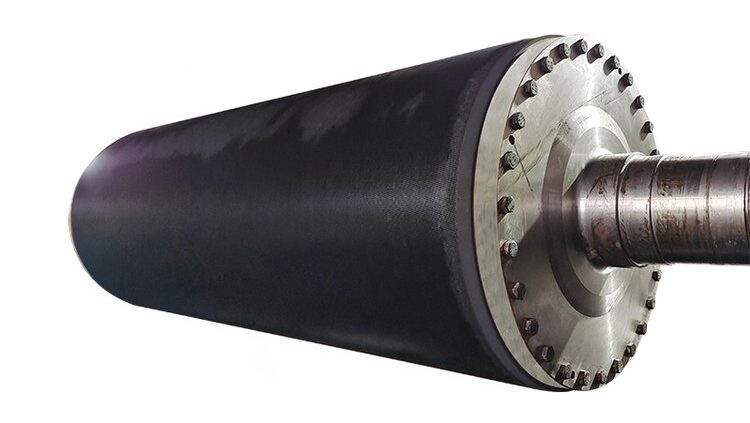
There are many types of rolls in the press section, and their structures are complex.
They can be classified by roll surface material: rubber rolls, stone rolls, stainless steel rolls, plastic rolls, etc.;
By dewatering method: plain rolls, suction rolls, grooved rolls, etc.;
By roll function: press rolls, gloss rolls, wringer rolls, etc.
Due to differences in paper machine type and speed, product variety, and application location, the material and structure of press rolls vary significantly.
1) Rubber-Covered Rolls
The roll body is made of cast iron or cast steel, with its surface machined with left- and right-hand threads of 2.5~3.0mm pitch.
The roll body is covered with hard rubber, typically with a hardness around 85° (Shore A).
Under the same nip linear pressure, rolls with higher rubber hardness achieve greater dewatering but poorer cross-direction moisture uniformity, thus requiring higher precision in the crown of the roll.
When machine speed increases and nip linear pressure rises, the required roll surface hardness increases accordingly. For example, the cover rubber hardness of a certain company’s Controlled Crown Roll is around 96° (Shore A). To ensure sufficient strength and elasticity, polyurethane material is used for the covering.
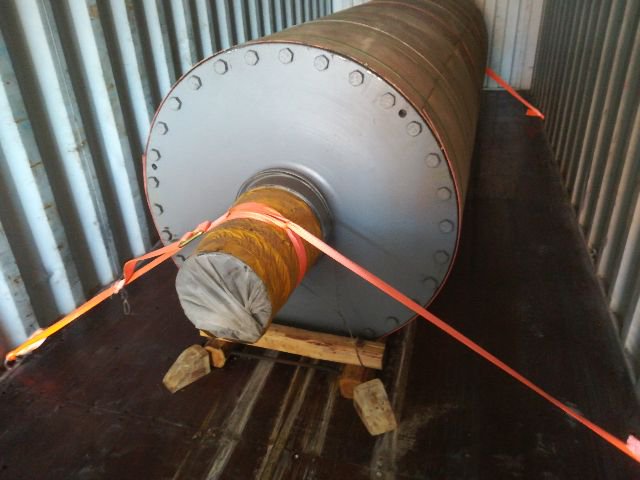
2) Stone Rolls
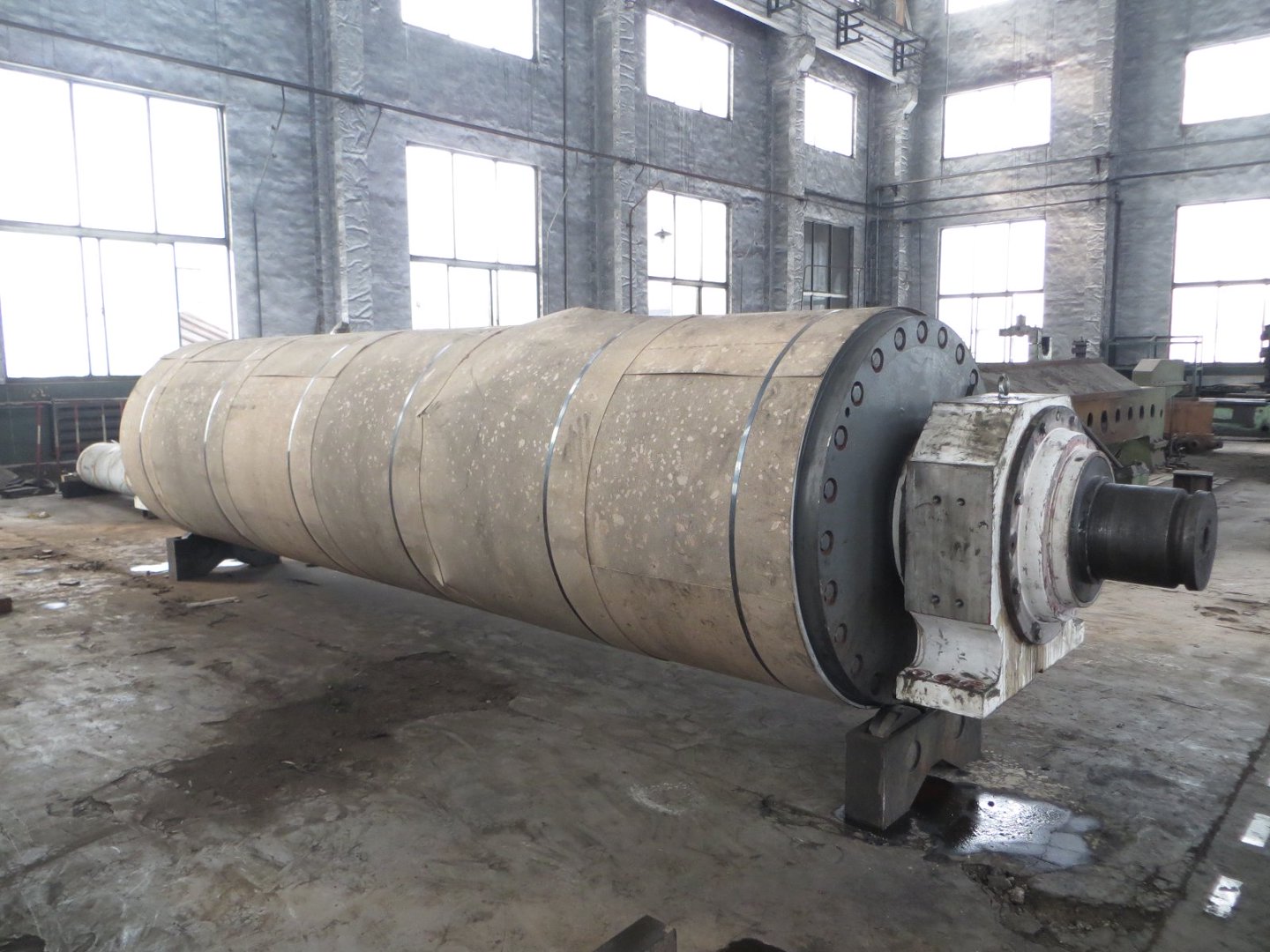
Stone rolls are composed of high-quality natural granite or artificial stone. Due to numerous micropores on their surface, the paper web readily separates from them.
Natural granite has poor bending strength and is unsuitable for use as bottom press rolls to avoid breakage. It should also not be exposed to excessive cold, heat, or localized heating, as this can cause the roll surface to crack. The surface must not contact strong acids or alkalis to prevent damage to its gloss.
The stone roll is connected to the shaft using two nuts with opposite thread directions (left- and right-hand). The space between the granite body and the shaft is filled or bonded with cement.
Each stone roll has a designated direction of rotation. During use, it must be verified that the rotation direction specified by the manufacturer matches the actual operating direction.
3) Suction Rolls
The roll body is typically made of phosphor bronze or stainless steel and covered with rubber. The rubber layer thickness is about 35mm, with a hardness of 85° (Shore A).
The vacuum box is made of cast iron or welded steel plates and can be easily installed or removed relying on two rollers on the box. The upper part of the vacuum box has two sealing strips made of carbon or plastic. Beneath the sealing strips, there are water-filled rubber hoses that push up against the strips to prevent air leakage.
When using plastic sealing strips, attention must be paid to installing a water spray pipe inside the roll to lubricate the sealing strips on the inner wall and reduce mechanical wear.
There are two adjusting rods inside the roll body to adjust the working width of the vacuum box. A worm gear system on the operator-side base is used to adjust the angle of the vacuum box.
4) Controlled Crown Rolls
During paper machine operation, it is often necessary to adjust the pressure between press rolls based on production conditions.
Clearly, the crown of the press rolls should also be adjusted accordingly; otherwise, ensuring uniform dewatering becomes difficult. This is something ordinary press rolls cannot achieve.
To overcome this drawback, Controlled Crown Rolls with adjustable crown were developed. Their structure consists of a shell without a crown, sleeved over a stationary core shaft. Bearings allow the shell to rotate around the core shaft.
Between the core shaft and the roll shell, an end face sealing device isolates the inner cavity from the outside. A transverse sealing device divides the inner cavity into upper and lower sections.
Pressurized oil from the hydraulic system enters the upper chamber through an inlet port, creating high pressure in this chamber.
Oil leaking from the sealing devices enters the lower chamber and returns to the hydraulic system through an outlet port, meaning the lower chamber is pressure-less. Changing the oil pressure in the upper chamber changes the roll’s deflection, hence the name Controlled Crown Roll.
Controlled Crown Rolls can form a press nip with ordinary press rolls, or two Controlled Crown Rolls can be paired together.
Using Controlled Crown Rolls in the press section offers the following advantages besides controlling crown for uniform compression dewatering:
- a) The pressurization device is inside the roll, simplifying the press structure and saving space.
- b) The oil layer has a cushioning effect, reducing vibration of the press roll.
- c) Reduced power consumption for drive.
- d) Bearings do not require sealing, eliminating the need to supply them with pressurized oil.
5) Bronze Rolls
Suction pick-up rolls, gloss rolls, etc., are made of phosphor bronze. Due to the low hardness of the bronze roll surface, poor wear resistance, and relatively poor stiffness, care must be taken during production and maintenance to avoid impacts on the surface.