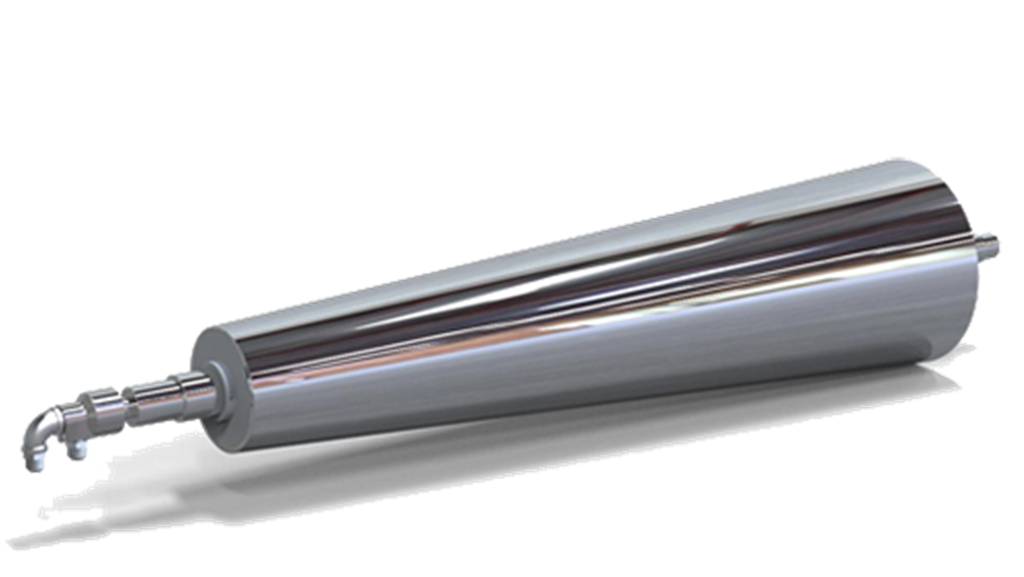
1. Basic Concepts of Rolling Rolls
Product Definition
Rolling rolls are the core components of steel rolling equipment and serve as the critical tools within a rolling mill that directly facilitate the plastic deformation of metal.
During the rolling process, the rolls generate pressure through rotation, compressing and elongating the metal material as it passes between them to form the desired plates, profiles, or strips.
Consequently, the performance of the product directly impacts product quality, production efficiency, and the operational stability of the rolling mill.
Basic Structure of Rolling Rolls
Generally, a rolling roll consists of three main parts: the roll body, the roll neck, and the roll end.
The roll body is the section that comes into direct contact with the metal material; it requires excellent wear resistance and resistance to thermal cracking.
The roll neck serves to house the bearings, supporting the roll and facilitating its rotation.
A well-engineered roll structure design enhances equipment stability and extends the service life of the product.
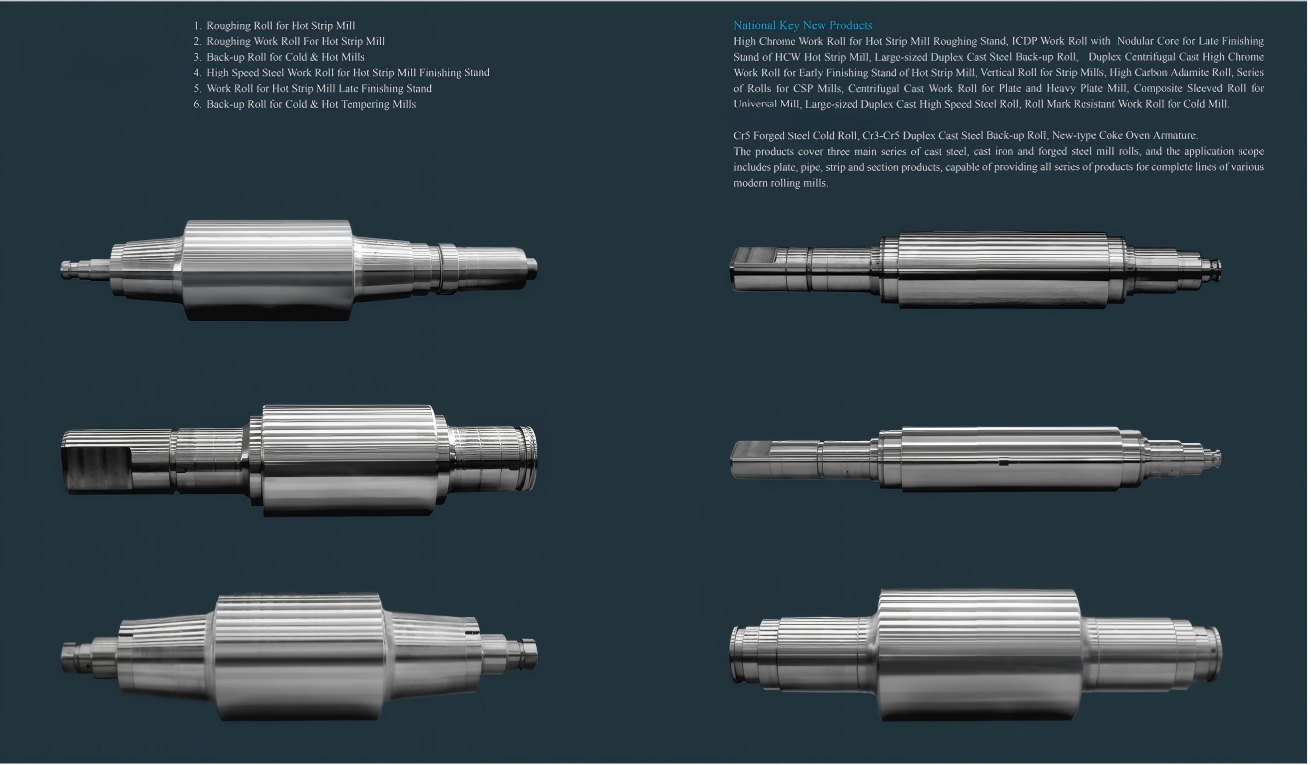
2. Classification of Rolling Rolls
Classification by Material
Based on their constituent materials, can be categorized into cast iron rolls, cast steel rolls, and alloy rolls, among others.
Cast iron rolls offer superior wear resistance and cost-effectiveness, making them widely utilized in general rolling operations.
Cast steel rolls, conversely, possess higher strength and are better suited for high-load rolling environments.
With advancements in metallurgical technology, novel alloy rolls are increasingly becoming the preferred choice for high-end rolling mills.
Classification by Application
From the perspective of application, rolling rolls can be classified into roughing rolls, intermediate rolls, and finishing rolls.
Roughing rolls are primarily responsible for executing large reductions in thickness, thereby requiring high strength and impact resistance.
Finishing rolls, on the other hand, prioritize surface quality and dimensional precision; consequently, they impose more stringent requirements on both the roll materials and the manufacturing processes employed.
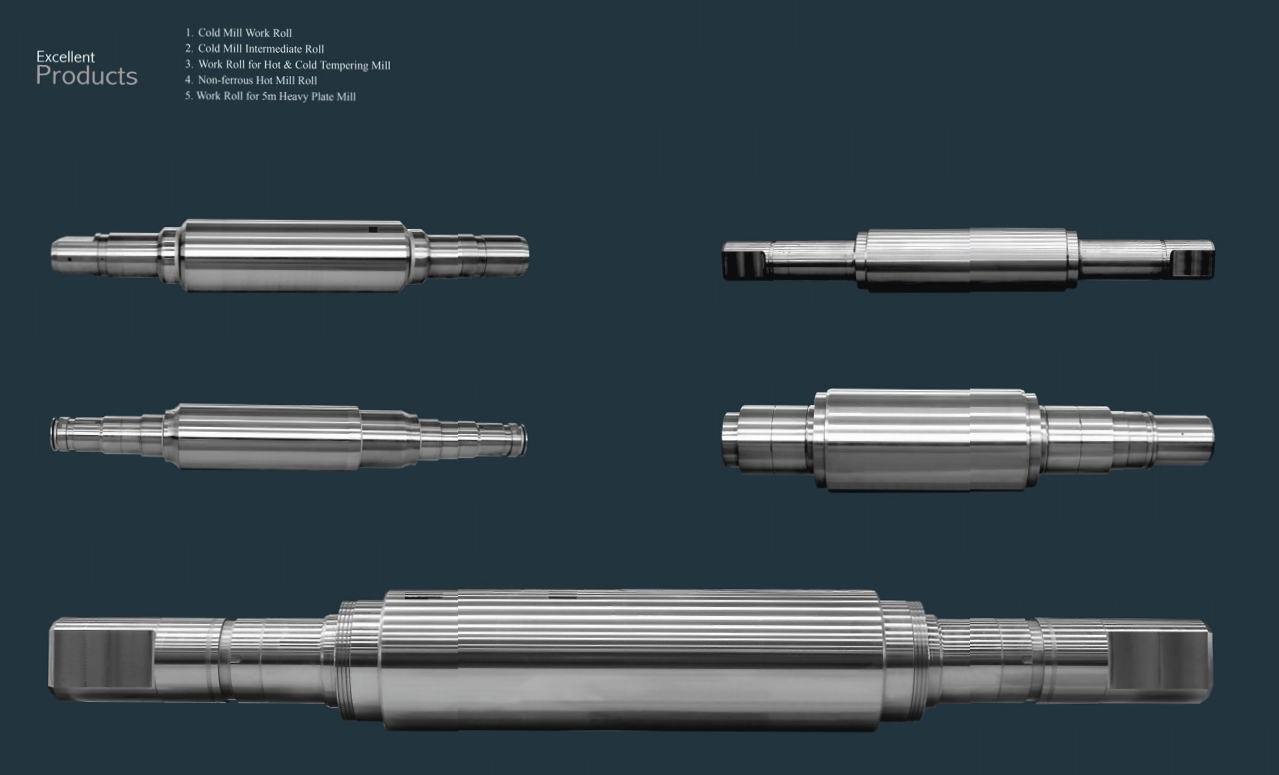
3.Applications of Rolling Rolls
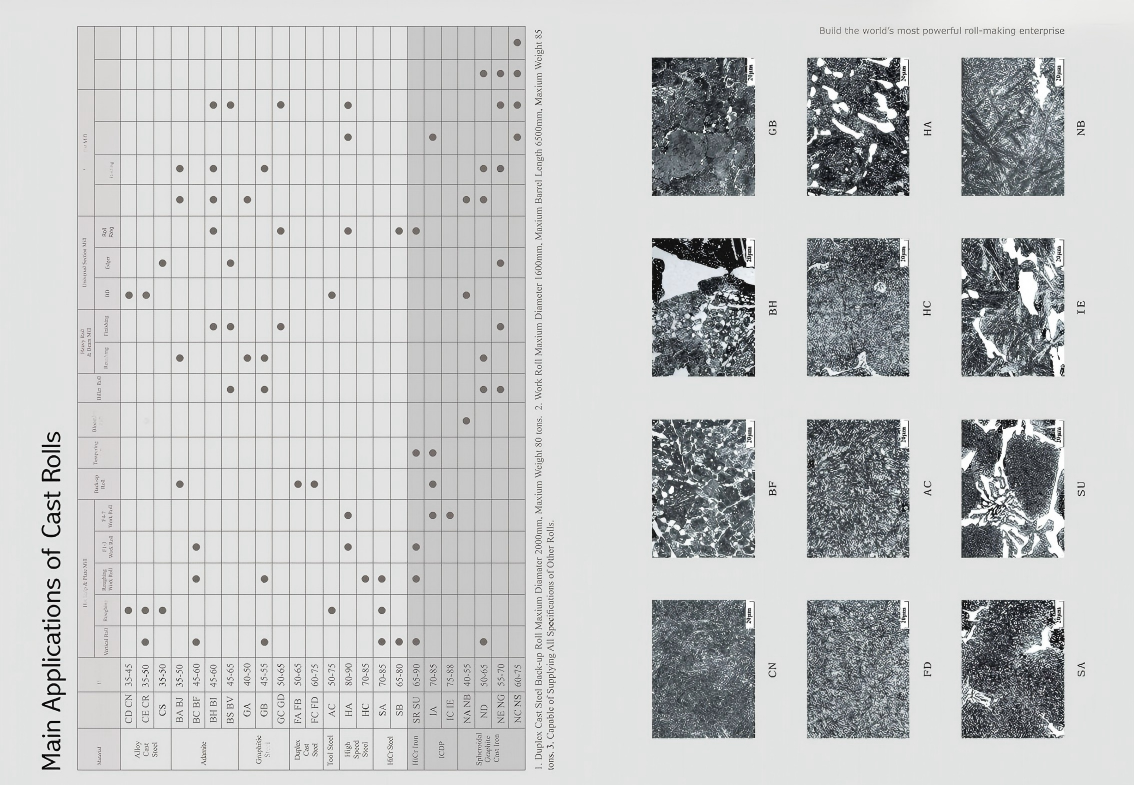
Cast Rolls
A cast steel roll is a steel roll formed via casting, characterized by a carbon content ranging from 0.4% to 2.1%. These rolls are primarily utilized in roughing stands for hot-rolled plates and strips, as well as in rolling mills for structural shapes, bars, and wire rods; their performance is enhanced through the addition of alloying elements such as chromium, molybdenum, and nickel.
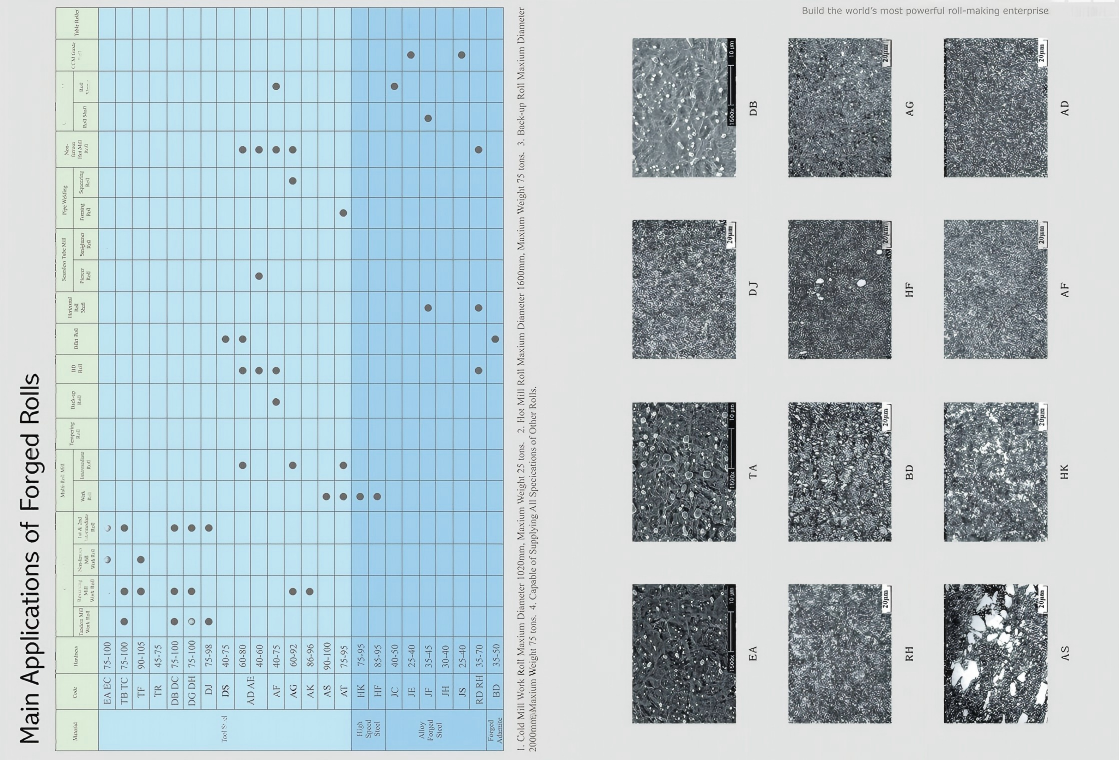
Forged Rolls
Forged rolls represent a method for manufacturing high-quality rolls; the forging process serves to refine the microstructure of low-plasticity materials—such as forged semi-steel and forged white cast iron—thereby enhancing their strength and toughness. As a product embodying high technological sophistication—integrating smelting, forging, and heat treatment processes—the forged roll serves as a core component in steel rolling production.
4. Manufacturing Process of Rolling Rolls
Product Heat Treatment
Through centrifugal casting or integral casting, a roll blank possessing a specific level of strength and hardness is formed.
To enhance the roll’s wear resistance and fatigue resistance, heat treatment is a necessary step during the manufacturing process.
Processes such as quenching and tempering are employed to refine the internal microstructure of the roll, thereby ensuring that it maintains stable performance even under conditions of high temperature and high pressure.
Machining of Rolling Rolls
Upon completion of the heat treatment, the rolls undergo precision machining, a process that includes steps such as turning, grinding, and surface finishing.
High-precision machining ensures dimensional accuracy and minimizes the likelihood of vibrations or surface defects occurring during the rolling process.
5. Development Trends in Roll Technology
With the advancement of the metallurgical industry, new high-performance materials are being continuously applied to roll manufacturing.
Digital and intelligent manufacturing technologies are gradually making inroads into the field of steel rolling.
Intelligent management not only enhances roll utilization efficiency but also reduces equipment downtime.