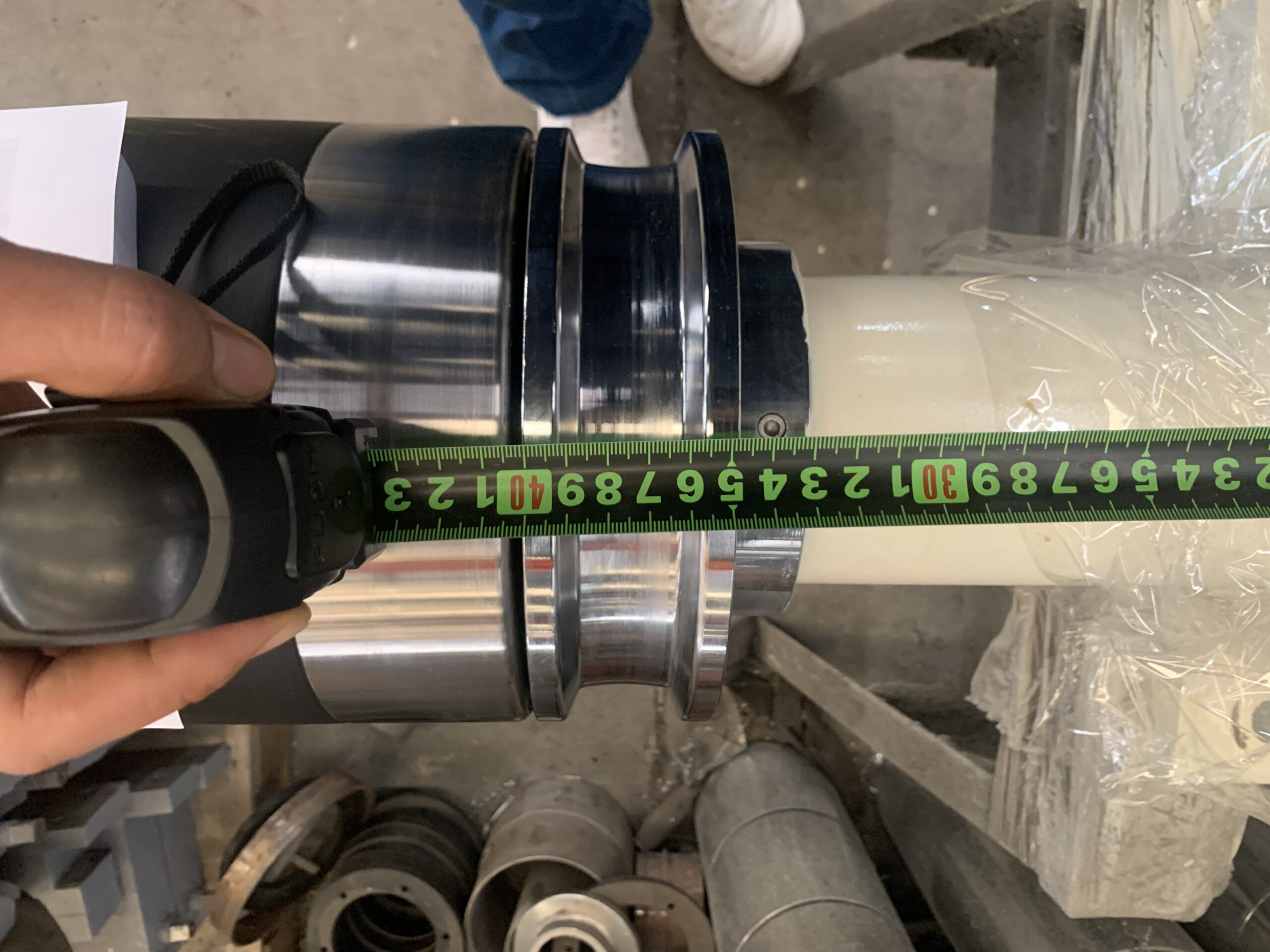
Introduction to Spreader Rolls
Spreader rolls, commonly known as bow rolls or curved rolls (also referred to as arc-shaped spreader rolls), are composed of high-quality aluminum alloy sleeves, rubber sleeves, curved core assemblies, bracket seats, and hand lever adjusters. They function to adjust tension, flatten substrates, and eliminate wrinkles and creases in the substrate.
Development of Spreader Rolls
To prevent felts from wrinkling during operation, each press section should be equipped with 1–2 felt spreader rolls, which spread the felt from the center toward both sides. The structure of the spreader roll body is similar to that of a guide roll, except that the left and right halves of the roll surface are each inlaid with left and right spiral lines. The pitch gradually expands from the center of the roll surface toward the ends. The spreader roll is also mounted on a tensioner, serving simultaneously as a tension roll.
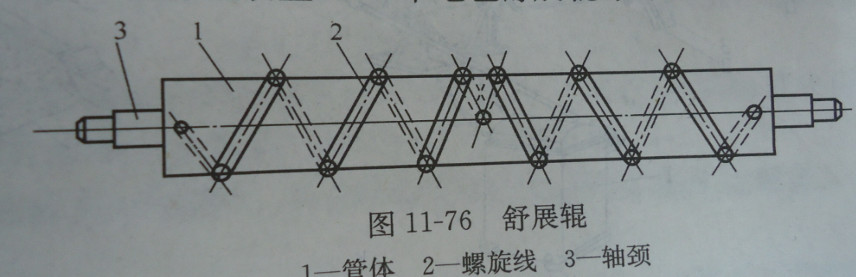
In modern paper machines, arc rolls are increasingly widely used as spreader rolls for felts or paper webs.
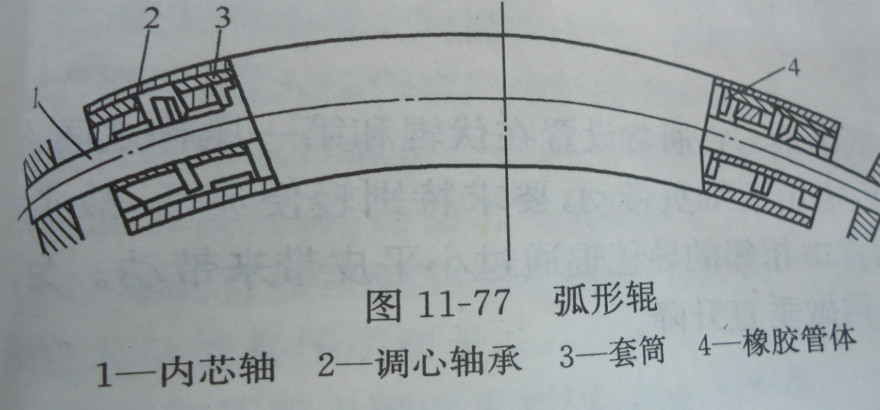
With the continuous increase in the speed of paper machinery and other equipment, the variety of paper types, and the multi-step processing of paper sheets, new requirements have been raised for the structure and functionality of arc rolls used for spreading paper sheets.
For high-speed, wide-width paper machinery and other equipment requiring high spreading quality, adjustable movable arc rolls are widely adopted. This structure is also used in imported equipment.
Purpose and Objectives of Spreader Rolls
Widely used in textiles, printing and dyeing, papermaking, plastics, packaging, printing, and other fields.
Suitable for both thick and thin substrates, especially for ultra-thin, ultra-soft, ultra-light, easily stretched, and low-tension substrates such as films, paper, silk, and knitted fabrics.
Prevents wrinkles from forming during substrate operation and spreads and straightens the substrate.
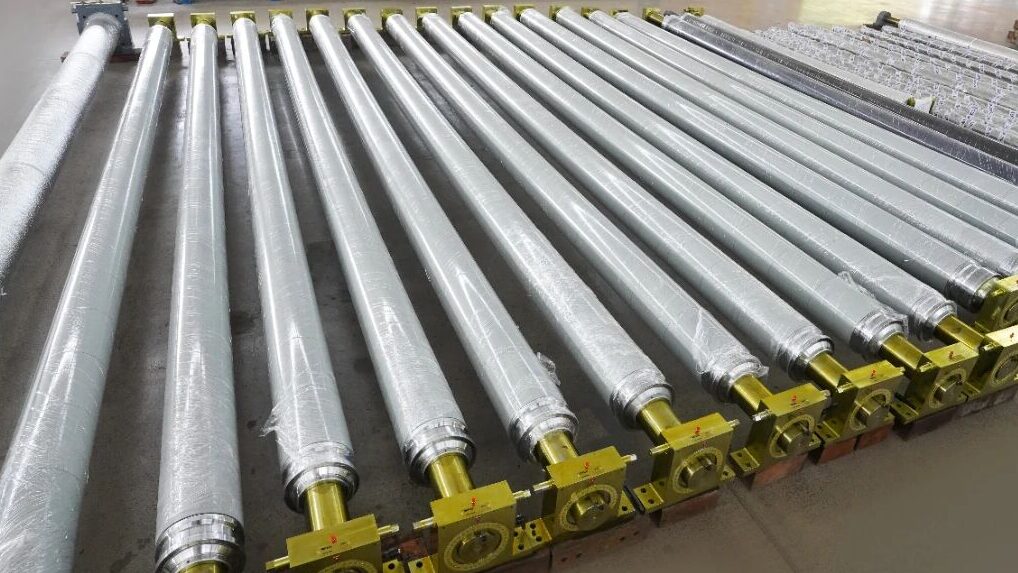
Classification of Spreader Rolls
The classification and working principles of arc rolls can be summarized as follows:
– Adjustable movable arc rolls with rubber sleeves
– Multi-section adjustable movable arc rolls
– Arc rolls with a main shaft that uses hydraulic deformation to control the curvature.
Structure of Spreader Rolls
- Multi-Section Steel Sleeve Adjustable Movable Arc Roll
This type of arc roll structure features a stationary curved shaft with multiple steel-sleeved roller shells mounted on it. There are certain gaps between each section. The inner cavity of the roller shell is fixed with rolling bearings, and the inner bore of the bearings is mounted on a withdrawal sleeve before being installed on the curved shaft. One end of the sleeve is fixed to the shaft with a set screw. There are isolation covers on both sides of the bearings, and special grease is injected. Each roller shell end has a dog-shaped plastic sleeve to connect to another roller shell. Inside the cavity of each dog-shaped connection, there is an oil-resistant sealing ring. The operation side has an assist wheel. The multi-section roller shells form a curved rotating roller.
Principle of Spreader Rolls
The principle of spreader rolls is based on a rigid inner tube and a flexible outer tube, both made of composite fiber materials. The highly sturdy inner tube acts as a support structure, while the flexible outer tube can bend along its entire length, forming an almost uniform arc. This precise bending, achieved through composite materials and an ingenious arc adjustment mechanism, provides optimal spreading effects for the transverse web.
Features:
– Transverse stretching and flattening with strong spreading capability, uniform substrate force, gentle spreading method, and no substrate deformation
– High rotational speed, minimal runout, no noise, safe and reliable
– Lightweight, low inertia, low rotational torque
– Wear-resistant, dynamic fatigue-resistant, aging-resistant, corrosion-resistant, and durable rubber strips
– Core shaft length is not limited
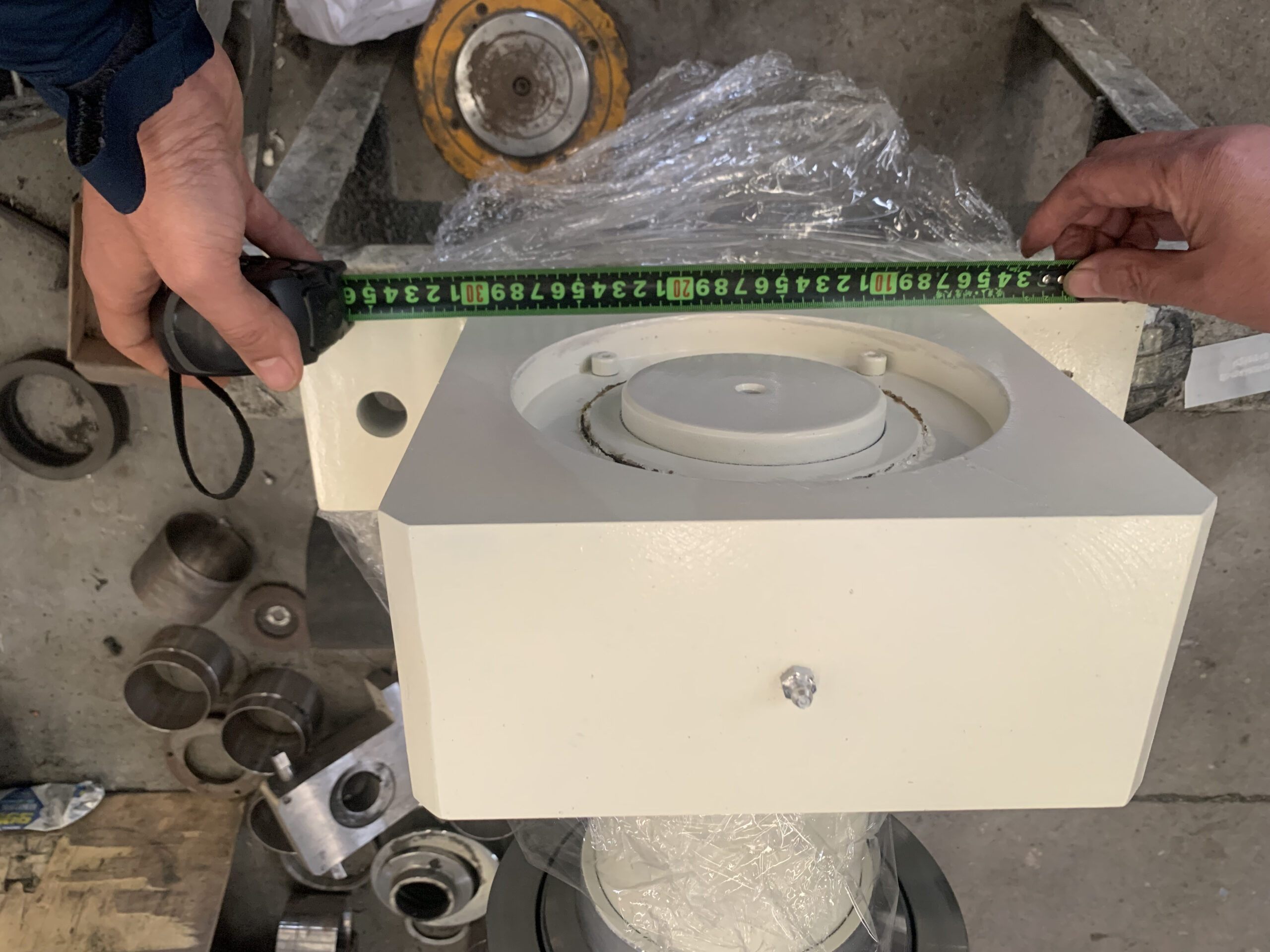
– Two types of bearing seats available, occupying minimal space and easy to install
– Simple debugging: only need to rotate the core shaft to eliminate wrinkles caused by various reasons, no frequent adjustments required
Spreading Effect
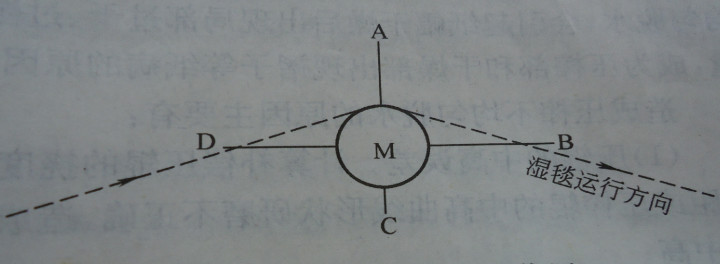
When the curved plane is at position B, the roll has the maximum spreading effect on the felt or web. If rotated from B to A or C, the spreading effect gradually decreases, reaching zero at points A and C. If the curved plane rotates to point D, the felt or web will experience the maximum narrowing toward the center. Thus, simply changing the position of the arc roll can adjust the transverse spreading effect.
Technical Parameters of Spreader Rolls
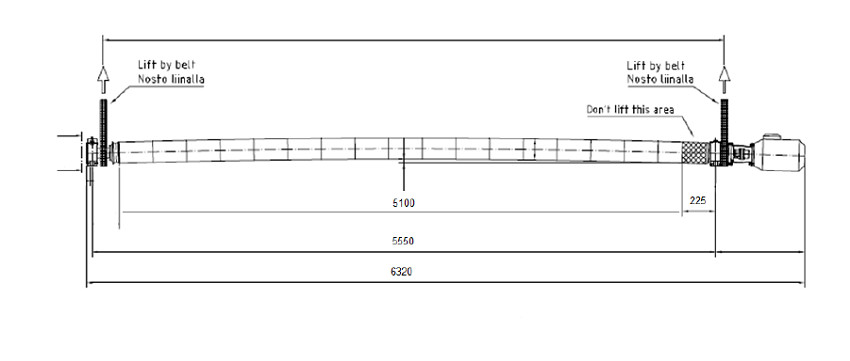
– Roll surface diameter: 210mm
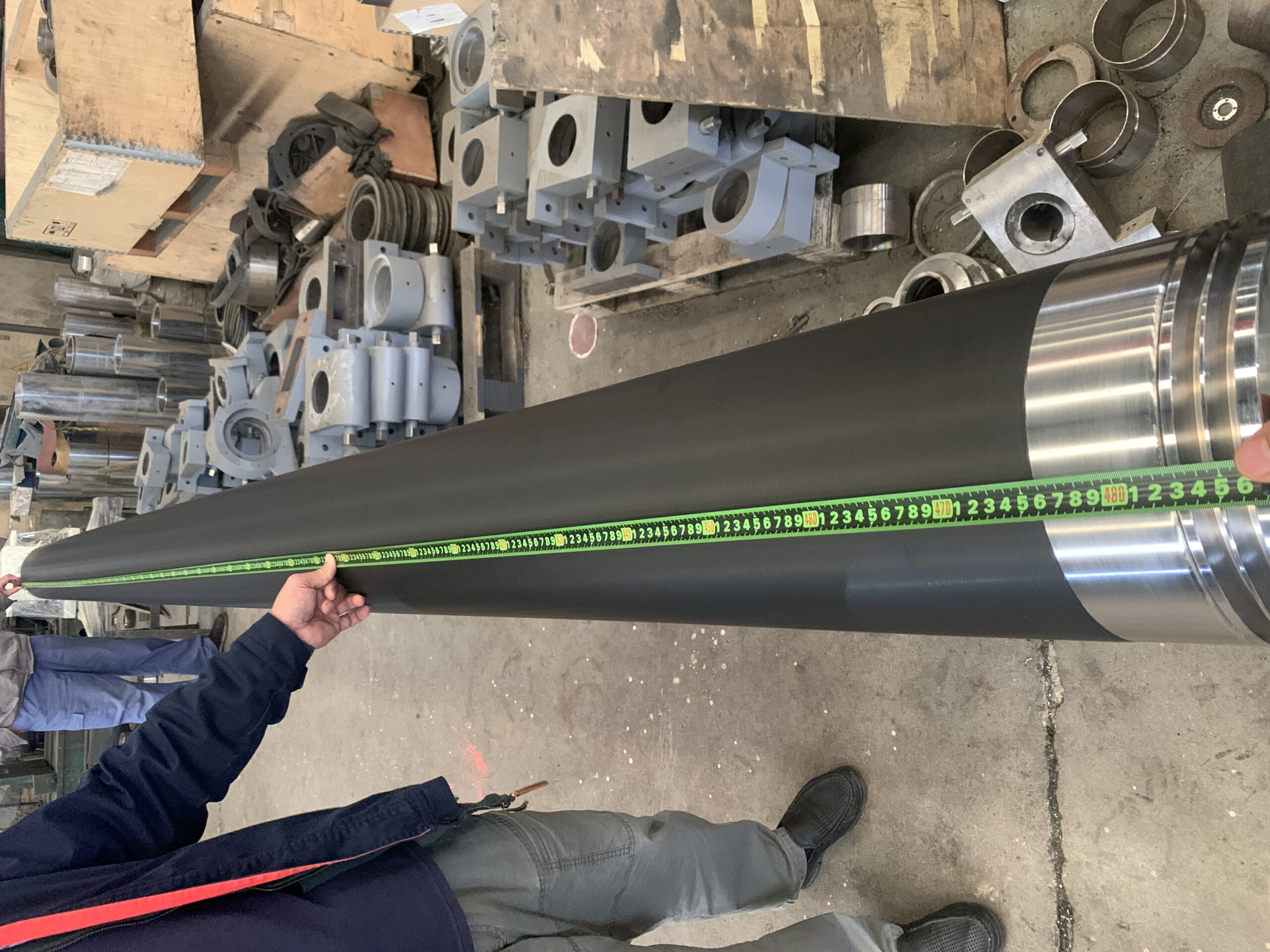
– Effective roll surface length: 5100mm
– Linear speed: 65–80 m/min
– Core shaft state: Fixed, non-rotating
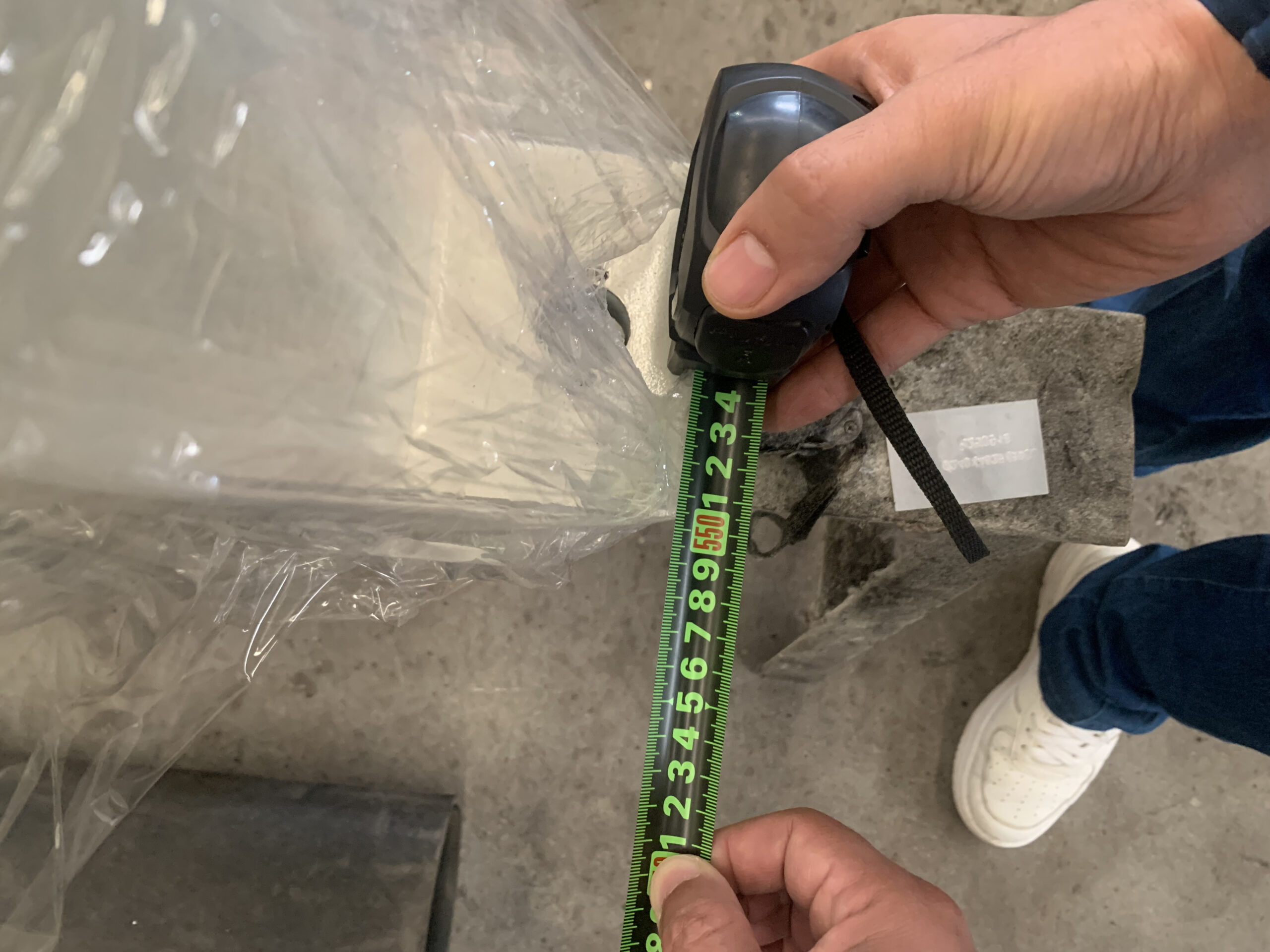
– Core shaft length: 5550mm
– Weight: 980kg
– Drive point: Yes
– Drive motor: 1.5kW
– Section length: 315mm
– Maximum deflection: 36mm
Arrangement of Spreader Rolls
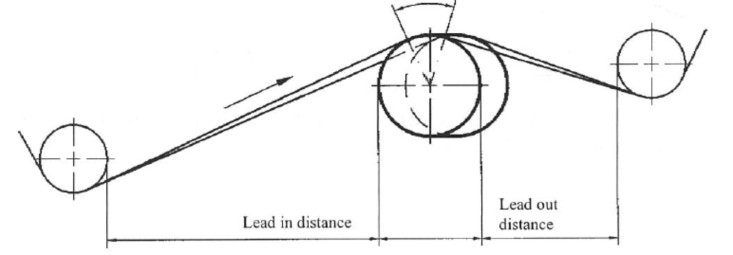
To achieve the best spreading effect, the roll position should be controlled as follows: the exit distance is 2–3 times the roll diameter, and the entry distance is twice the exit distance. The shorter the exit distance, the better the roll’s spreading effect.
The handwheel adjustment device for the spreader roll is on the operation side, meaning the deflection curvature can only be adjusted from the operation side.
Operation of Spreader Rolls
Loosen the locking bolt of the adjustment bolt. Use the handwheel or ratchet to rotate the roll to the desired position. An arrow on the roll head indicates the direction of maximum convexity. After adjusting the roll, tighten the locking bolt.
This roll can eliminate wrinkles and creases in the web’s longitudinal direction and even flatten loose web edges or a loose web center.
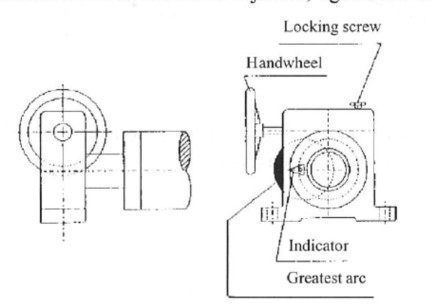
The locking bolts for the first and second presses are not installed due to inconvenient installation positions. The spreader roll after the second press has locking bolts, so when adjusting it, first release the locking bolts before making adjustments.
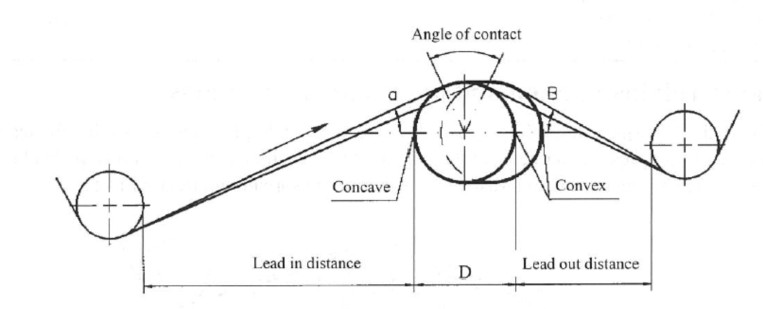
Figure B: If the web edges are too loose, rotate the convex surface of the roll downward (as shown by the arrow) away from the web.
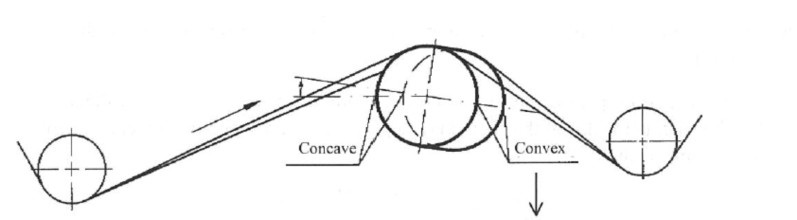
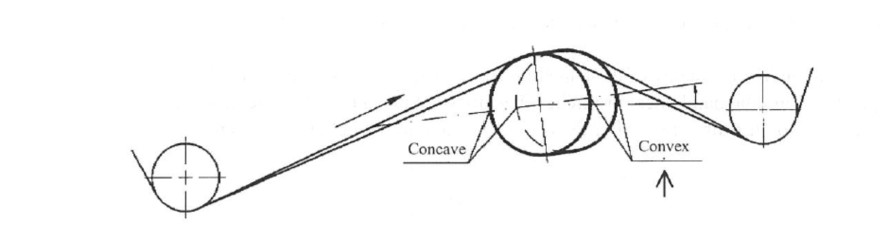
Figure C: If the center area of the web is too loose, rotate the convex surface of the roll upward (as shown by the arrow) toward the web until the tension is uniform.
Washing and Cleaning of Spreader Rolls
When washing the roll, do not use destructive solvents or sharp tools.
When cleaning the roll surface, it is recommended to use hot caustic soda water.
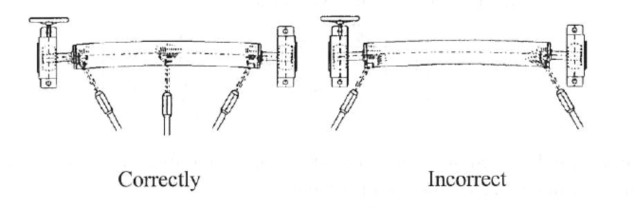
When cleaning the roll with high-pressure water, pay special attention to the protective covers at both ends of the roll, as water may enter the roll interior.
The cleaning method is shown in the figure below.
Daily Maintenance
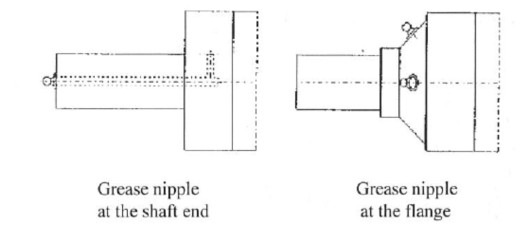
The labyrinth seal requires regular greasing. The seal protects the internal components of the roll from moisture, dust, and other contaminants.
– For roll diameters between 100–180mm, press grease twice, approximately 2g per shaft end.
– For roll diameters of 190mm and above, press grease four times, approximately 4g per shaft end.
Lubrication Intervals:
– Dry applications: Once per month
– Damp applications: Once every two weeks
– Wet applications: Once per week
The position of the grease nipples is shown in the figure below.